Sherrill and I visited more than 60 countries and most of the United States during our 52 year marriage. This is number 77 of a series about our lives and travels, true stories of two people discovering the world, each other, and themselves through five decades of traveling together. If you scroll down, you'll come to earlier posts in this series. To start at the beginning of our marriage and travels look at the Archives list in the sidebar and start with May, 2017. Older posts are a previous series.
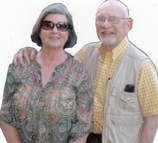 Sherrill & Bruce, 2013
 "Why?" friends asked Sherrill and me, when we told them that we going to India for the third time.
The short answer was that India was the most fascinating country we'd ever visited. It wasn't easy, it could be harsh and upsetting, but it was never boring. Sherrill and I didn't exactly love it, but we couldn't resist it. Our first visit was to the northwest part of India, Rajasthan, where many of the famous sites, such as the Taj Mahal, were.
The short answer was that India was the most fascinating country we'd ever visited. It wasn't easy, it could be harsh and upsetting, but it was never boring. Sherrill and I didn't exactly love it, but we couldn't resist it. Our first visit was to the northwest part of India, Rajasthan, where many of the famous sites, such as the Taj Mahal, were.
Our second trip focused the extreme south of the subcontinent, which was complex and colorful in a different way. Now, thanks again to our friend Hala, we were entering a very different realm, the northeast corner of that huge country, where we'd experience the extreme contrasts of Kolkota (Calcutta), India's largest city with its population of more than 16 million then, and remote areas of tiny villages and dense jungles, where the local people had never seen foreigners, especially the part of Eastern India known as West Bengal.
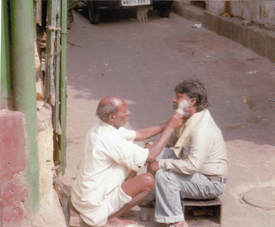 Sidewalk barber, Kolkata
 Morning in Kolkata: A man sat on a low stool while another hunkered next to him on the sidewalk, lathering and shaving his face. A shoeshine man was setting out tins of polish and brushes on a square of cloth and positioning the foot rest for his customers. A sidewalk barber was giving a squatting customer a haircut, his fingers expertly manipulating the scissors as hair fell to the pavement. I passed these scenes and others like them as I maneuvered through central Kolkota at nine in the morning. Half a dozen men in loose loincloths washed themselves with water gushing from a pipe. Men and women on the way to work and students in uniforms hurried past. Sidewalk vendors set out newspapers and used books, lottery tickets and cheap jeans. Shopkeepers with stubby brooms swept in front of their shops, debris piling at the curb.
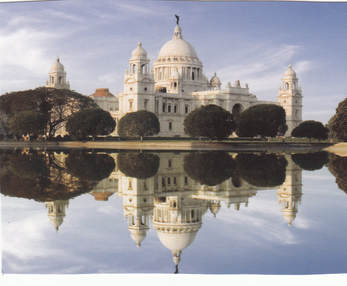 Victoria Memorial, Kolkata | 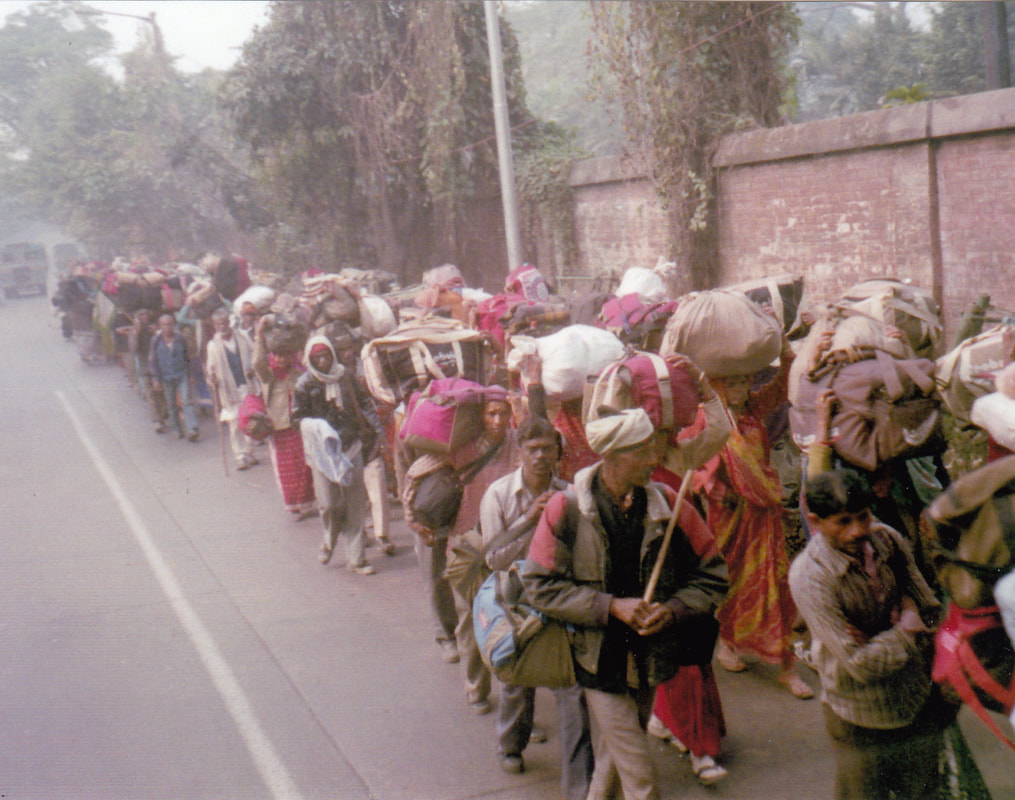 Religious pilgrims, Kolkata |
Not once did I see a Western face, either a tourist or a business person. No one was shouting or arguing, fighting or acting crazy. Our hotel was in the old British section of Kolkota, the so-called "White Town," so I didn't see any beggars, only individuals trying to survive. The capital of British India for 138 years, until the government moved to New Delhi in 1911, Kolkota was a rich stew of human beings and architecture. As Sherrill and I explored further during our visit, we discovered that, yes, another 6 million people came into the city every day to work and, yes, 40,000 people did sleep on the streets, and we did see people pawing through trash for whatever they could sell, but the overall impression we got was of determination and energy, not despair. It was a young population, 50 percent were 25 and younger, hopeful for the future.
 | 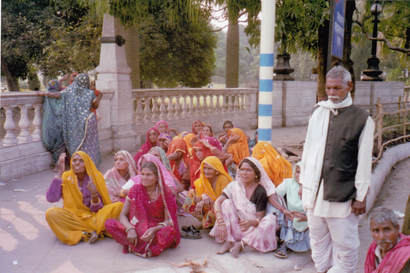 Religious pilgrims at Victoria Memorial, Kolkota |
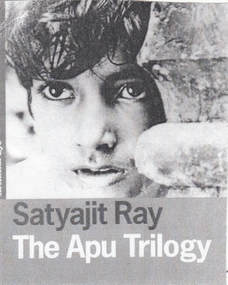
One reason I was there was a boy called Apu and his creator, the great Indian filmmaker, Satyajit Ray. At nineteen, I'd spent my entire life in three western states, then one day I took a Greyhound bus from San Jose to Bengal to meet Apu and his family. In that distant time of no DVDs, VHS tapes, cable TV, personal computers, or internet, only two ways existed to see old or foreign movies: the late show on television or one of the flea trap movie houses found only in big cities. Two college friends joined me on an expedition to San Francisco's North Beach, where we sat in a cold dark room filled with metal folding chairs to see all three movies of Satyajit Ray's Apu Trilogy—the story of a Bengali boy, his family, and his journey through life.
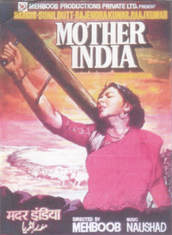
Several years after that, Sherrill and I saw that other classic Indian film epic, Mother India, with the great Indian actress Nargis as Radha, a village woman who struggled to raise her sons through poverty, disasters caused by both nature and men, and the difficult times India faced after independence, an Indian Gone with the Wind and then some. It took a few more years, but we finally got to India and even to Kolkata and rural Bengal, to the world of Apu.
Poster for Mother India.
starring Nargis
Poster for Mother India.
starring Nargis
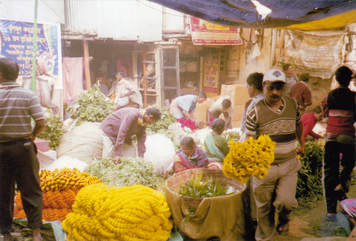 Kolkata Flower Market
 Early in 2013, the year we visited Eastern India, the magazine India Today published a cover story about how "angry and disillusioned with the passive ruling establishment" the Indian people were. They probably had reason to be angry, but we didn't see any demonstration of it. Kolkata may have been a city in decay, but it also was a city of resilience.
We soon realized just how huge the city was. We drove out to the Maidan, a vast park area near the colossal white Victoria Memorial, which looked more like a palace than a monument. It was no wonder that Indians who visited it often thought that Queen Victoria was a goddess. Across town, we visited the enormous central flower market by the Hougli River, a branch of the sacred Ganges in which we saw people at their ritual prayers and baths.
We soon realized just how huge the city was. We drove out to the Maidan, a vast park area near the colossal white Victoria Memorial, which looked more like a palace than a monument. It was no wonder that Indians who visited it often thought that Queen Victoria was a goddess. Across town, we visited the enormous central flower market by the Hougli River, a branch of the sacred Ganges in which we saw people at their ritual prayers and baths.
The so-called "Black Town" was the part of the city left by the British for the Indians, now a strange mixture of decaying mansions and slums. Some of the Indian merchants became very wealthy and built homes to rival any owned by the British. One of those, built in 1835 by a Bengali merchant, blending neoclassic architecture with traditional Bengali, came to be called the Marble Palace. Tucked into the crumbling glory of "Black Town" we found one of Mother Teresa's centers for orphaned children. Nuns showed us through the facility, rooms with many small beds in which the children slept, and school rooms. This also was the part of the city revealed in the book and movie "City of Joy," based on real people in this section of Kolkata.
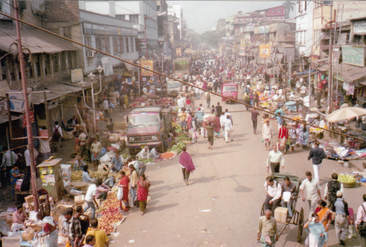 Kolkata "Black" Town | 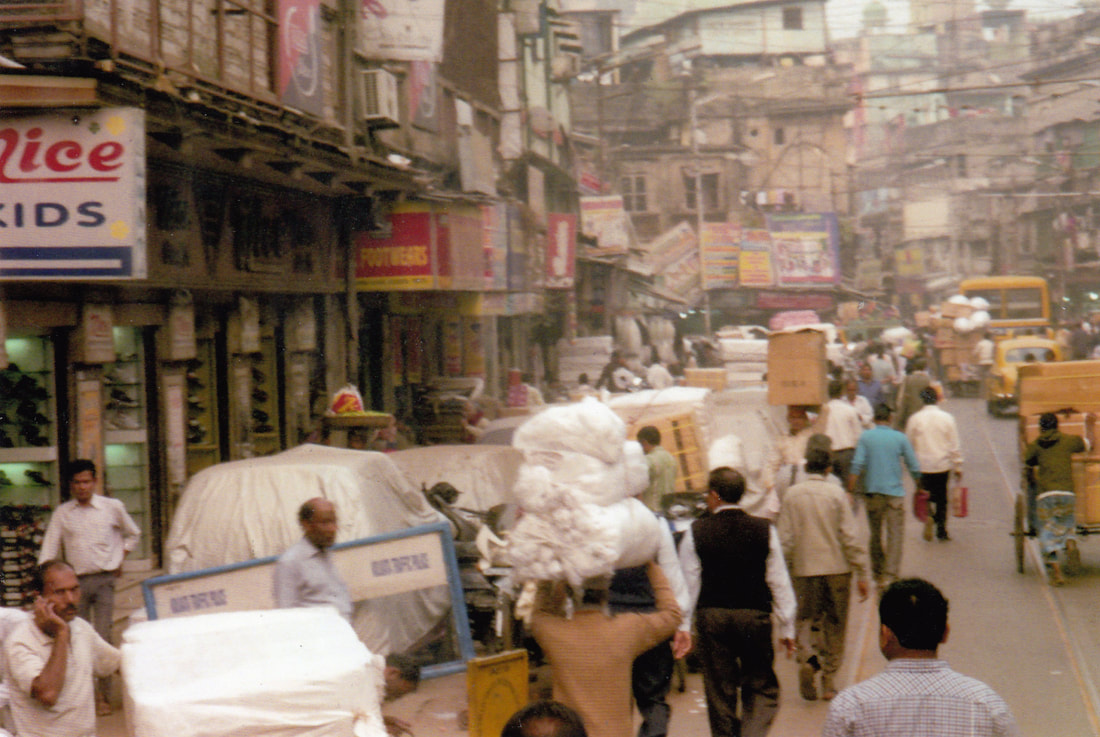 |
Sherrill was not a sentimental person, but she was moved by the small children in their cribs and in their classrooms. After all, for many years she was a children's librarian.
A "Grey Town" sprawled between the "White Town" and the "Black Town," an area in which we found a Muslim district with several mosques, a Chinese section, synagogues that remained from when a large Jewish community had been there, booksellers, and workshops where religious statues were made. Although we were in Kolkata several days, we could have spent much more time there, once the second city of the British Empire. We could have applied to Kolkata what Dr. Johnson said about the first city of the old empire: "When you're tired of London, you're tired of life." I may never return, but I can imagine myself there again, experiencing the pulse of its life and savoring its mysteries.
A "Grey Town" sprawled between the "White Town" and the "Black Town," an area in which we found a Muslim district with several mosques, a Chinese section, synagogues that remained from when a large Jewish community had been there, booksellers, and workshops where religious statues were made. Although we were in Kolkata several days, we could have spent much more time there, once the second city of the British Empire. We could have applied to Kolkata what Dr. Johnson said about the first city of the old empire: "When you're tired of London, you're tired of life." I may never return, but I can imagine myself there again, experiencing the pulse of its life and savoring its mysteries.
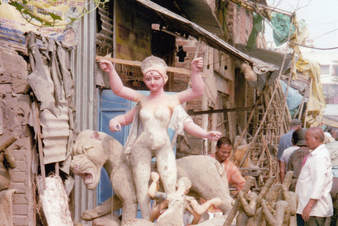 Kolkata "Grey" Town, statues of deities being made for holiday, after which they will be thrown into the river. | 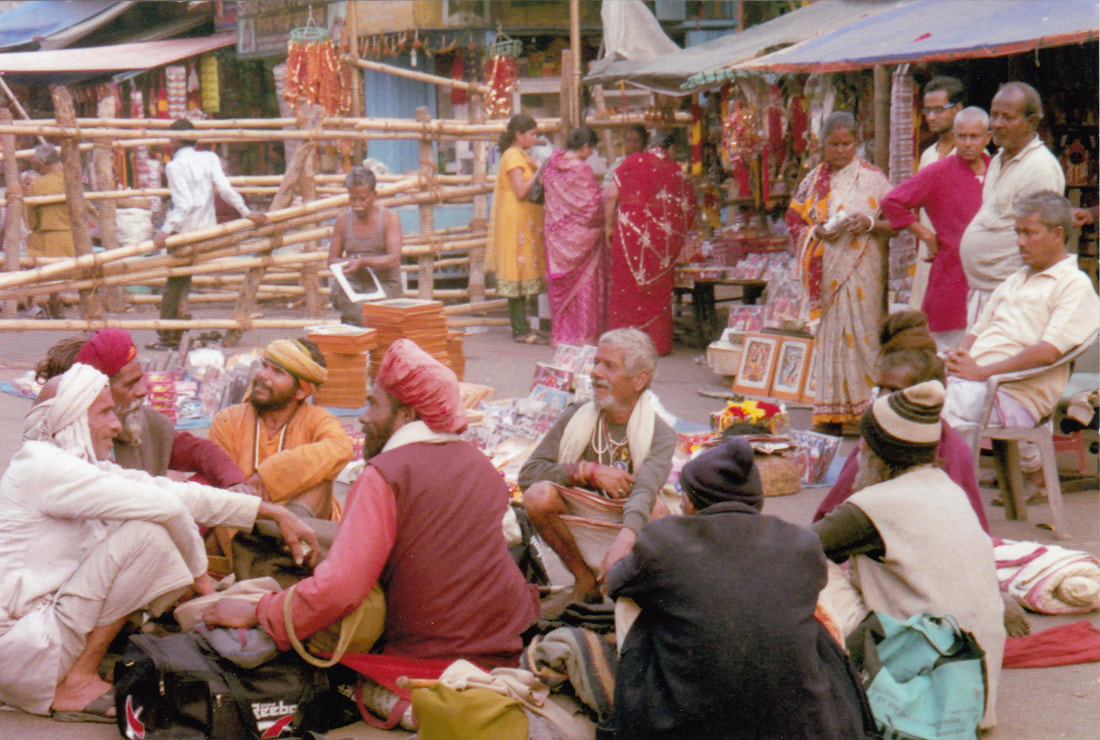 Sadhus (ascetics and monks) at temple to goddess Kali |
* * *
"She is the grandmother of all tigers," Jai told my friend P. and me, as we gazed from the top of our elephant on the gold and black tiger reclining in the tall grass. Jai, the son of the Lodge manager, and the two of us had ridden with the mahout into the forest near one of the swamps in the Kanha National Park, one of India's foremost wildlife preserves and a sanctuary for the majestic and elusive Bengal tiger.
"She is the grandmother of all tigers," Jai told my friend P. and me, as we gazed from the top of our elephant on the gold and black tiger reclining in the tall grass. Jai, the son of the Lodge manager, and the two of us had ridden with the mahout into the forest near one of the swamps in the Kanha National Park, one of India's foremost wildlife preserves and a sanctuary for the majestic and elusive Bengal tiger.
After we settled in at the camp the first day, we walked into the forest with one of the local guides and Jai. Along the way, Jai pointed out the massive brown mounds with soaring spires that oddly resembled the Gaudi church Sherrill and I had seen in Barcelona.
"Termite mounds," the handsome brown-skinned boy explained, in his rather formal Indian English. "They have rooms inside. The termites drag in leaves that rot and make soil so mushrooms will grow for them to eat." Some of the mounds were torn apart by wild boar and other animals seeking a termite dinner. "Wild boar is the tiger's favorite food," Jai added.
Termites—wild boar—tiger: the natural cycle.
Early the next morning, we drove in jeeps from our cabins much deeper into the forest.
"Termite mounds," the handsome brown-skinned boy explained, in his rather formal Indian English. "They have rooms inside. The termites drag in leaves that rot and make soil so mushrooms will grow for them to eat." Some of the mounds were torn apart by wild boar and other animals seeking a termite dinner. "Wild boar is the tiger's favorite food," Jai added.
Termites—wild boar—tiger: the natural cycle.
Early the next morning, we drove in jeeps from our cabins much deeper into the forest.
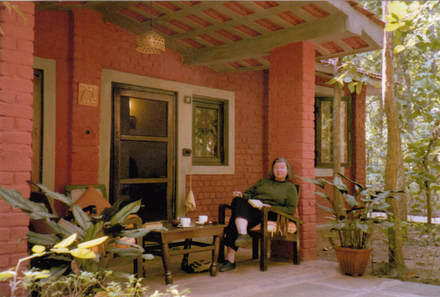 Sherrill at our room, Kanha Nature Preservation Area | 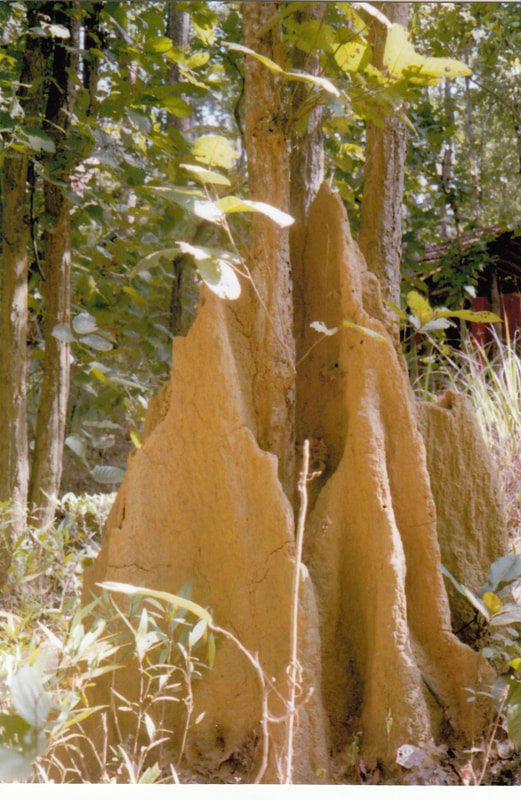 Giant termite mound |
We heard the tiger, but only glimpsed it once, crossing the road far ahead, pausing to let out a roar, and vanishing into the trees. "It's a female," the driver/guide told us. "talking to its cubs in the forest over there."
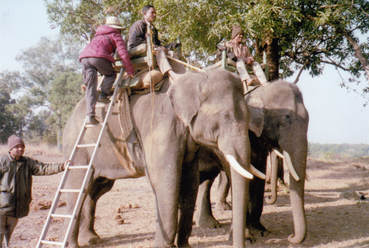 Our friend P. climbing onto elephant to look for tigers with me.
 Two days later, we had the opportunity to ride an elephant to seek tigers and other wild animals who usually managed to avoid detection.
"I hope you enjoy it" Sherrill told me.
None of our friends except P. wanted to ride the elephant, either. So the two of us and Jai climbed up a ladder to a small wood shelf on the elephant's back, behind the mahout. Sherrill and I had ridden on an elephant twice before, but in a box on the elephant's back that we entered from a platform. This felt much more precarious.
We passed clusters of monkeys, a grumpy black boar, colorful kingfishers, peacocks, and other birds. I had no doubt that all around us the forest undulated with astonishing varieties of life. Then, as the elephant's great feet crunched through the grass and bush, we spied the body of a freshly killed brown swamp deer with an impressive rack of antlers in the grass between slender crocodile-skin trees.
"I hope you enjoy it" Sherrill told me.
None of our friends except P. wanted to ride the elephant, either. So the two of us and Jai climbed up a ladder to a small wood shelf on the elephant's back, behind the mahout. Sherrill and I had ridden on an elephant twice before, but in a box on the elephant's back that we entered from a platform. This felt much more precarious.
We passed clusters of monkeys, a grumpy black boar, colorful kingfishers, peacocks, and other birds. I had no doubt that all around us the forest undulated with astonishing varieties of life. Then, as the elephant's great feet crunched through the grass and bush, we spied the body of a freshly killed brown swamp deer with an impressive rack of antlers in the grass between slender crocodile-skin trees.
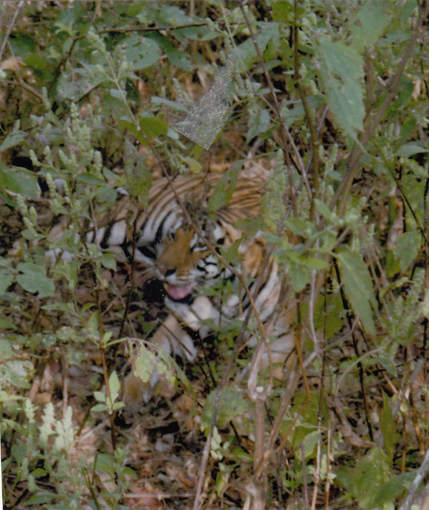 Female tiger resting after killing deer for her cubs--photograph taken from the top of the elephant.
 I started to exclaim, but the mahout sitting in front of me put his finger to his lips.
"Shh!" He pointed ahead.
The elephant crunched forward, my legs swinging near the rough-barked trees. Then we saw the tiger, partially camouflaged in the tall grass, recuperating from the massive effort of bringing down the deer. Raising her huge head, she glared at us, her striped white, black, and orange face a pattern of disdain and distrust. We knew that she must be the female tiger we'd spotted from the jeep the day before, communicating to her cubs. No doubt, the deer was to be a meal for them. She let out a low growl and slowly lifted her body until she was standing. Shrugging her powerful shoulders, she stretched her long body and ambled away, escaping our scrutiny, to a spot in the grass a few yards away. Our mahout gave a command to the elephant, directing it past the tiger, watching us from her new place.
Afterwards, I told Sherrill about the experience: elephant ride, deer, tiger, all of it. It felt very natural, riding the elephant with the boy and our friend and looking down so closely on the dead deer and the exhausted mother tiger, just part of the natural order of things—although a wonderful, exciting adventure
"I'm glad you did it," Sherrill told me, "and that it all worked out okay. As long as I didn't have to do it."
"Shh!" He pointed ahead.
The elephant crunched forward, my legs swinging near the rough-barked trees. Then we saw the tiger, partially camouflaged in the tall grass, recuperating from the massive effort of bringing down the deer. Raising her huge head, she glared at us, her striped white, black, and orange face a pattern of disdain and distrust. We knew that she must be the female tiger we'd spotted from the jeep the day before, communicating to her cubs. No doubt, the deer was to be a meal for them. She let out a low growl and slowly lifted her body until she was standing. Shrugging her powerful shoulders, she stretched her long body and ambled away, escaping our scrutiny, to a spot in the grass a few yards away. Our mahout gave a command to the elephant, directing it past the tiger, watching us from her new place.
Afterwards, I told Sherrill about the experience: elephant ride, deer, tiger, all of it. It felt very natural, riding the elephant with the boy and our friend and looking down so closely on the dead deer and the exhausted mother tiger, just part of the natural order of things—although a wonderful, exciting adventure
"I'm glad you did it," Sherrill told me, "and that it all worked out okay. As long as I didn't have to do it."
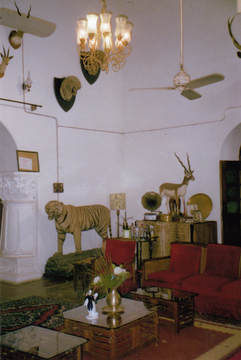
A day or so later, we drove into a newly formed state, Chhattisgarh, a section of Eastern India dense with mountains and forests, where many ancient tribes still lived, separate from the rest of India and the world. We stayed in an old, almost deserted palace, full of antique furniture from different eras, not very clean, rather spooky. We kept expecting Bella Lugosi to appear in one of the shadowy hallways.
Our room, clean or not, was huge, the bathroom, too, with the toilet and shower on a 15 inch high platform. If a vampire didn't get us, Sherrill and I decided, we'd break our necks in the bathroom. The lounge, downstairs, was full of dilapidated, moth-eaten stuffed animals, including a pathetic tiger in danger of losing both its head and its tail. Our host, who may have been a prince down on his luck, sometimes ate with us. He always looked hung over at breakfast and drunk every other time we saw him.
Palace Hotel lounge
with old hunting trophies
Our room, clean or not, was huge, the bathroom, too, with the toilet and shower on a 15 inch high platform. If a vampire didn't get us, Sherrill and I decided, we'd break our necks in the bathroom. The lounge, downstairs, was full of dilapidated, moth-eaten stuffed animals, including a pathetic tiger in danger of losing both its head and its tail. Our host, who may have been a prince down on his luck, sometimes ate with us. He always looked hung over at breakfast and drunk every other time we saw him.
Palace Hotel lounge
with old hunting trophies
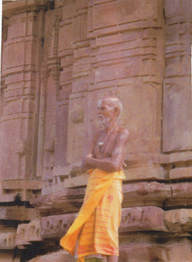
On the way to the palace, we stopped at an ancient temple. Local people gathered around, staring at us with undisguised curiosity. Apparently, they had never seen foreigners. The next day, in fact, when we were in one of tribal villages, our guide told us that they thought of us as if we were shamans or priests dropped from the heavens, maybe to bless them. Small children, though, ran away from us crying—because, he said, the only people they'd seen in trousers had come to give them shots. A few times, to avoid alarming people, we parked our SUVs on the road some distance from the village or market we were going to visit and walked to it.
Temple caretaker
Temple caretaker
This was an exciting time to visit Eastern India, a period of transition. Some of the tribes had begun to assimilate together, our guide told us, unintentionally blending their customs. The government programs and schools were starting to have an influence, too, for better or worse. Children often were sent to school, he said, just to get the free lunch they were given.
"Whether we like it or not," he said. "The world is changing."
"Whether we like it or not," he said. "The world is changing."
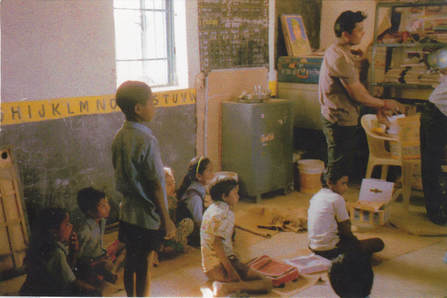 Village school | 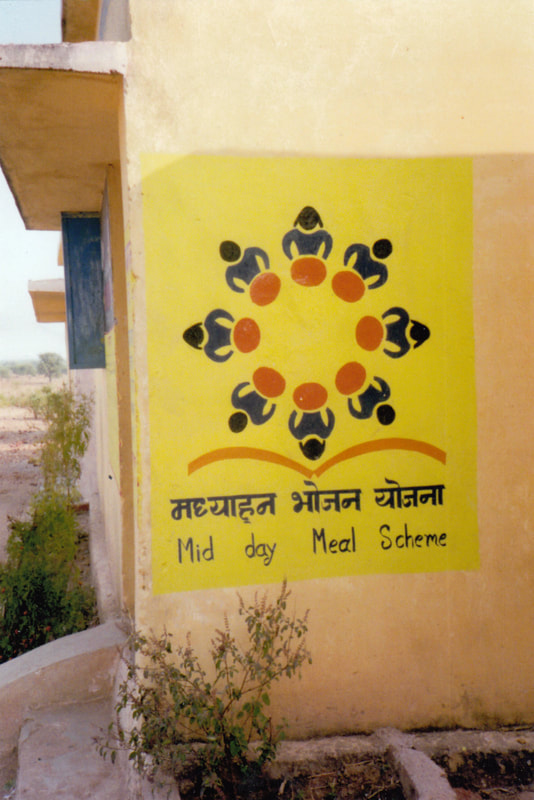 Poster publicizing free lunch for students |
End of Part One, Eastern India.
To be continued....
If you find these posts interesting, why not explore the rest of my website, too? Just click on the buttons at the top of the page and discover where they take you—including a bio, information about my four novels, along with excerpts from them, and several complete short stories.
Please pass the posts on to anybody else you think might enjoy them.
To be continued....
If you find these posts interesting, why not explore the rest of my website, too? Just click on the buttons at the top of the page and discover where they take you—including a bio, information about my four novels, along with excerpts from them, and several complete short stories.
Please pass the posts on to anybody else you think might enjoy them.
 RSS Feed